
위대한 개츠비
도서 목록으로 돌아가기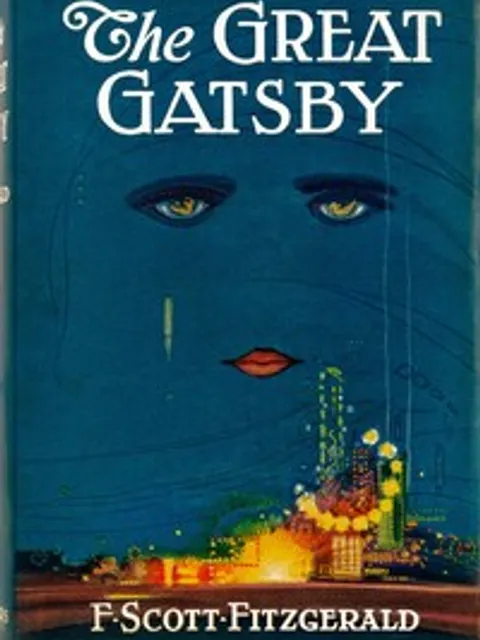
B2
위대한 개츠비
F. 스콧 피츠제럴드 · EN · 48589단어
F. 스콧 피츠제럴드의 재즈 시대 소설은 주인공 닉 캐러웨이가 롱아일랜드 부유층의 화려한 세계에 발을 들여놓고 수수께끼 같은 이웃 제이 개츠비에게 매료되는 과정을 그립니다. 개츠비의 호화로운 파티 뒤에는 데이지 뷰캐넌을 향한 남몰래 품은 갈망이 숨겨져 있으며, 이 소설은 섬세한 대화와 이해하기 쉬운 모더니즘적 문체를 통해 야망, 기억, 계급, 자아 창조, 그리고 이상을 추구하는 데 따르는 대가를 탐구합니다.
15장 중 1장7%
로그인하면 읽기 진행 상황을 동기화하고 단어를 덱에 저장할 수 있습니다.
Chapter I · Part 1 of 2
627단어 · 4분
In my younger and more vulnerable years my father gave me some advice that I’ve been turning over in my mind ever since.
“Whenever you feel like criticizing anyone,” he told me, “just remember that all the people in this world haven’t had the advantages that you’ve had.”
He didn’t say any more, but we’ve always been unusually communicative in a reserved way, and I understood that he meant a great deal more than that. In consequence, I’m inclined to reserve all judgements, a habit that has opened up many curious natures to me and also made me the victim of not a few veteran bores. The abnormal mind is quick to detect and attach itself to this quality when it appears in a normal person, and so it came about that in college I was unjustly accused of being a politician, because I was privy to the secret griefs of wild, unknown men. Most of the confidences were unsought—frequently I have feigned sleep, preoccupation, or a hostile levity when I realized by some unmistakable sign that an intimate revelation was quivering on the horizon; for the intimate revelations of young men, or at least the terms in which they express them, are usually plagiaristic and marred by obvious suppressions. Reserving judgements is a matter of infinite hope. I am still a little afraid of missing something if I forget that, as my father snobbishly suggested, and I snobbishly repeat, a sense of the fundamental decencies is parcelled out unequally at birth.
And, after boasting this way of my tolerance, I come to the admission that it has a limit. Conduct may be founded on the hard rock or the wet marshes, but after a certain point I don’t care what it’s founded on. When I came back from the East last autumn I felt that I wanted the world to be in uniform and at a sort of moral attention forever; I wanted no more riotous excursions with privileged glimpses into the human heart. Only Gatsby, the man who gives his name to this book, was exempt from my reaction—Gatsby, who represented everything for which I have an unaffected scorn. If personality is an unbroken series of successful gestures, then there was something gorgeous about him, some heightened sensitivity to the promises of life, as if he were related to one of those intricate machines that register earthquakes ten thousand miles away. This responsiveness had nothing to do with that flabby impressionability which is dignified under the name of the “creative temperament”—it was an extraordinary gift for hope, a romantic readiness such as I have never found in any other person and which it is not likely I shall ever find again. No—Gatsby turned out all right at the end; it is what preyed on Gatsby, what foul dust floated in the wake of his dreams that temporarily closed out my interest in the abortive sorrows and short-winded elations of men.
My family have been prominent, well-to-do people in this Middle Western city for three generations. The Carraways are something of a clan, and we have a tradition that we’re descended from the Dukes of Buccleuch, but the actual founder of my line was my grandfather’s brother, who came here in fifty-one, sent a substitute to the Civil War, and started the wholesale hardware business that my father carries on today.
I never saw this great-uncle, but I’m supposed to look like him—with special reference to the rather hard-boiled painting that hangs in father’s office.I graduated from New Haven in 1915, just a quarter of a century after my father, and a little later I participated in that delayed Teutonic migration known as the Great War.I enjoyed the counter-raid so thoroughly that I came back restless.
책 전체를 읽고 들으려면 가입하거나 로그인하세요.