
Around the World in Eighty Days
Back to books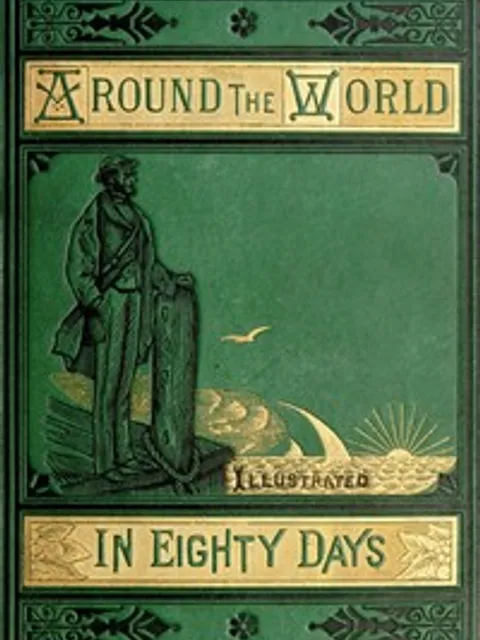
B2
Around the World in Eighty Days
Jules Verne · EN · Words: 62728
Jules Verne’s adventure novel follows the precise English gentleman Phileas Fogg and his resourceful servant Passepartout after Fogg wagers that he can travel around the world in eighty days. Pursued by Detective Fix and challenged by missed connections, rescues, storms, and unfamiliar customs, they race across continents and oceans against the clock. Fast pacing, geographic variety, and comic suspense make the journey an engaging classic for upper-intermediate English readers.
Chapter 1 of 373%
Log in to sync progress and save words into decks.
Chapter I. In Which Phileas Fogg and Passepartout Accept Each Other, the One as Master, the Other as Man
Words: 447 · 3 min
Mr. Phileas Fogg lived, in 1872, at No. 7, Saville Row, Burlington Gardens, the house in which Sheridan died in 1814. He was one of the most noticeable members of the Reform Club, though he seemed always to avoid attracting attention; an enigmatical personage, about whom little was known, except that he was a polished man of the world. People said that he resembled Byron—at least that his head was Byronic; but he was a bearded, tranquil Byron, who might live on a thousand years without growing old.
Certainly an Englishman, it was more doubtful whether Phileas Fogg was a Londoner. He was never seen on ’Change, nor at the Bank, nor in the counting-rooms of the “City”; no ships ever came into London docks of which he was the owner; he had no public employment; he had never been entered at any of the Inns of Court, either at the Temple, or Lincoln’s Inn, or Gray’s Inn; nor had his voice ever resounded in the Court of Chancery, or in the Exchequer, or the Queen’s Bench, or the Ecclesiastical Courts. He certainly was not a manufacturer; nor was he a merchant or a gentleman farmer. His name was strange to the scientific and learned societies, and he never was known to take part in the sage deliberations of the Royal Institution or the London Institution, the Artisan’s Association, or the Institution of Arts and Sciences. He belonged, in fact, to none of the numerous societies which swarm in the English capital, from the Harmonic to that of the Entomologists, founded mainly for the purpose of abolishing pernicious insects.
Phileas Fogg was a member of the Reform, and that was all.
The way in which he got admission to this exclusive club was simple enough.
He was recommended by the Barings, with whom he had an open credit. His cheques were regularly paid at sight from his account current, which was always flush.
Was Phileas Fogg rich? Undoubtedly. But those who knew him best could not imagine how he had made his fortune, and Mr. Fogg was the last person to whom to apply for the information. He was not lavish, nor, on the contrary, avaricious; for, whenever he knew that money was needed for a noble, useful, or benevolent purpose, he supplied it quietly and sometimes anonymously. He was, in short, the least communicative of men. He talked very little, and seemed all the more mysterious for his taciturn manner. His daily habits were quite open to observation; but whatever he did was so exactly the same thing that he had always done before, that the wits of the curious were fairly puzzled.
Had he travelled?
Register or log in to read and listen to the full book.