
Stroj času
Späť na knihy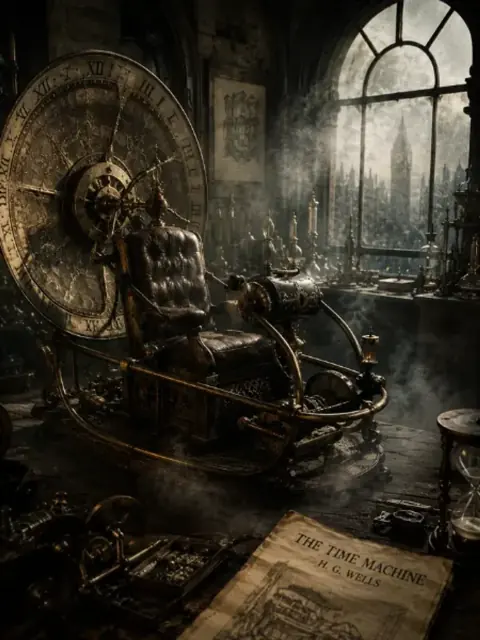
B2
Stroj času
H. G. Wells · EN · Slová: 32617
V tejto prelomovej sci-fi novele zvedavý viktoriánsky vynálezca zostrojí stroj, ktorý dokáže cestovať časom, a použije ho na to, aby preskočil ďaleko za hranice svojej vlastnej éry. Pri skúmaní vzdialenej budúcnosti objaví zvláštny a krásny svet, ktorý pod svojím povrchom ukrýva temné tajomstvá. Prostredníctvom živých scén a pútavého dobrodružstva príbeh spochybňuje pokrok, triedne rozdiely a to, čo sa môže stať s ľudstvom. Táto prístupná, no zároveň podnetná klasika pozýva čitateľov, aby si predstavili čas ako novú dimenziu a zamysleli sa nad skutočnou cenou civilizácie.
Kapitola 1 z 176%
Prihláste sa, aby ste synchronizovali postup a ukladali slová do balíčkov.
Chapter I — Introduction
Slová: 279 · 2 min
The Time Traveller (for so it will be convenient to speak of him) was expounding a recondite matter to us. His grey eyes shone and twinkled, and his usually pale face was flushed and animated. The fire burnt brightly, and the soft radiance of the incandescent lights in the lilies of silver caught the bubbles that flashed and passed in our glasses. Our chairs, being his patents, embraced and caressed us rather than submitted to be sat upon, and there was that luxurious after-dinner atmosphere, when thought runs gracefully free of the trammels of precision. And he put it to us in this way—marking the points with a lean forefinger—as we sat and lazily admired his earnestness over this new paradox (as we thought it) and his fecundity.
“You must follow me carefully. I shall have to controvert one or two ideas that are almost universally accepted. The geometry, for instance, they taught you at school is founded on a misconception.”
“Is not that rather a large thing to expect us to begin upon?” said Filby, an argumentative person with red hair.
“I do not mean to ask you to accept anything without reasonable ground for it. You will soon admit as much as I need from you. You know of course that a mathematical line, a line of thickness nil, has no real existence. They taught you that? Neither has a mathematical plane. These things are mere abstractions.”
“That is all right,” said the Psychologist.
“Nor, having only length, breadth, and thickness, can a cube have a real existence.”
“There I object,” said Filby. “Of course a solid body may exist. All real things—”
“So most people think.
Zaregistrujte sa alebo sa prihláste a prečítajte si či vypočujte celú knihu.